Lúa’s story after Arimunani
Many families have questions when they discover a school with a more respectful, experiential and personalised approach: how do respectful education and academic standards go hand in hand?
Will my child have a sufficient academic level if they later move to another school?
Will they be able to adapt to a more traditional teaching approach?
Will they be prepared for exams, fixed timetables and the pace of secondary school?
Lúa and her family’s story is part of El Faro, our space for sharing experiences that inspire us on the journey of education. It is a story that helps us understand how respecting each child’s individuality can also help build a solid academic foundation.
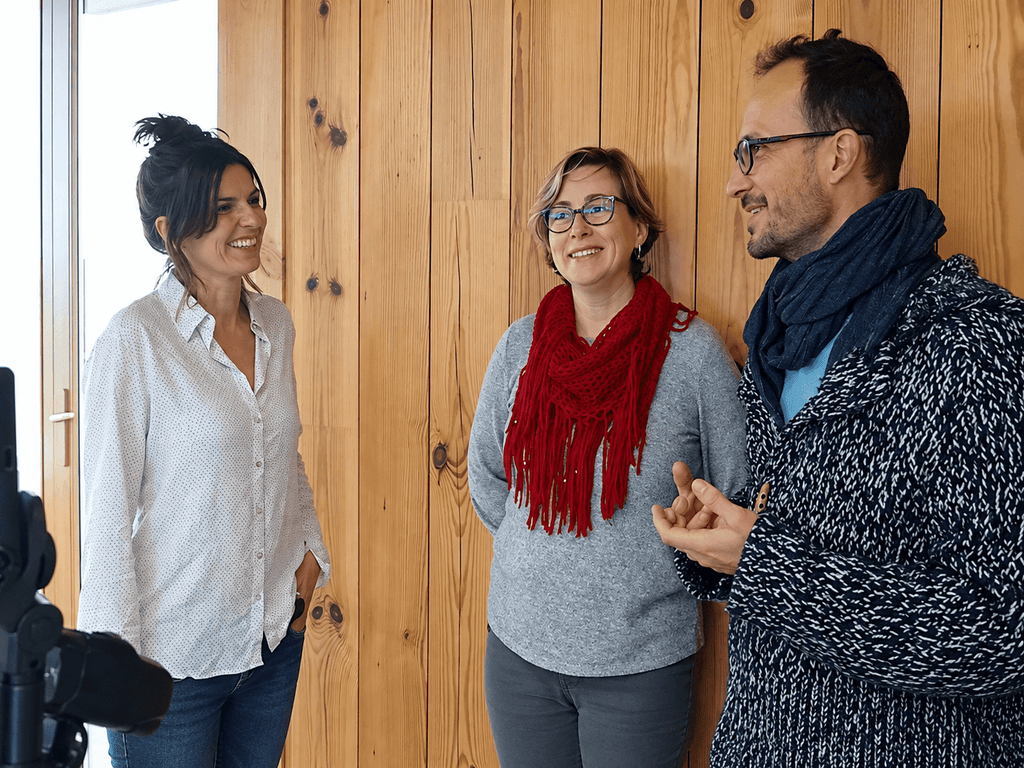
Lúa joined Arimunani for the final two years of primary school, Years 5 and 6. Her family came across Arimunani almost by chance, through her father’s involvement in the construction of the building. First came the space itself; then they discovered an educational approach they connected with from the very beginning. After a meeting with Juanma, their minds were made up: within just one week, Lúa left her previous school to begin a new chapter at Arimunani.
The family’s main concern was social rather than academic. Lúa was coming from another school, where she had her group of friends and a whole life built around it. However, settling in was much easier and quicker than they had expected.
The school’s family atmosphere, the closeness of the team and the direct relationships with the people at Arimunani made both Lúa and her family feel welcome from the very beginning.
“We have always felt very welcome, both us and her.” – Lúa’s family
The value of being herself in a respectful school
Every child comes to school with their own way of being, seeing and experiencing the world. Lúa’s family describe her as a girl with a strong, vibrant personality, someone who stands out from the crowd and has her own way of expressing herself.
At Arimunani, Lúa found an environment where her individuality was recognised, welcomed and supported. She was able to express her character, her energy and her own way of relating to others.
“She could be herself every day.” – Lúa’s family
For her family, this was one of the biggest differences. In educational systems where children are often expected to fit into a group and meet rigid standards, Lúa had room at Arimunani to express herself, discover things about herself and learn on a personal level too.
That process was not only about subjects or academic content. It was also about learning to manage her emotions, channel her anger, negotiate, express what she needed and find tools to relate to herself and others.
Education means supporting not only what a child learns, but also how they live, feel, express themselves and gradually develop their own sense of security.
This idea also appears in Nico’s story, where emotional support was key to helping him gain confidence in himself.
Different ways of learning
When Lúa talks about her time at Arimunani and her current school, she does so with a simply clarity.
“It’s not that you learn more because one system works one way or another; they are simply different ways of learning.” – Lúa
This quote captures an important part of her experience.
At Arimunani, Lúa experienced a more flexible way of learning, with workshops, assemblies, projects and independent learning periods that allowed her to organise herself, get ahead with tasks, finish work or spend time on what she needed.
At her new school, things work differently: more fixed timetables, subjects assigned to specific periods and a more traditional structure. She acknowledges that this kind of organisation is also good, but she misses some of Arimunani’s activities and spaces, such as independent learning time, theatre, journalism and the commitment workshops that lasted throughout the year.
If she could design a school to suit her, she knows exactly what she would do: make it a 50–50 mix, taking elements from both systems. Her perspective is valuable because it does not set one way of learning against another. It simply shows that there are different paths and that each child may need different things to learn, grow and feel comfortable.
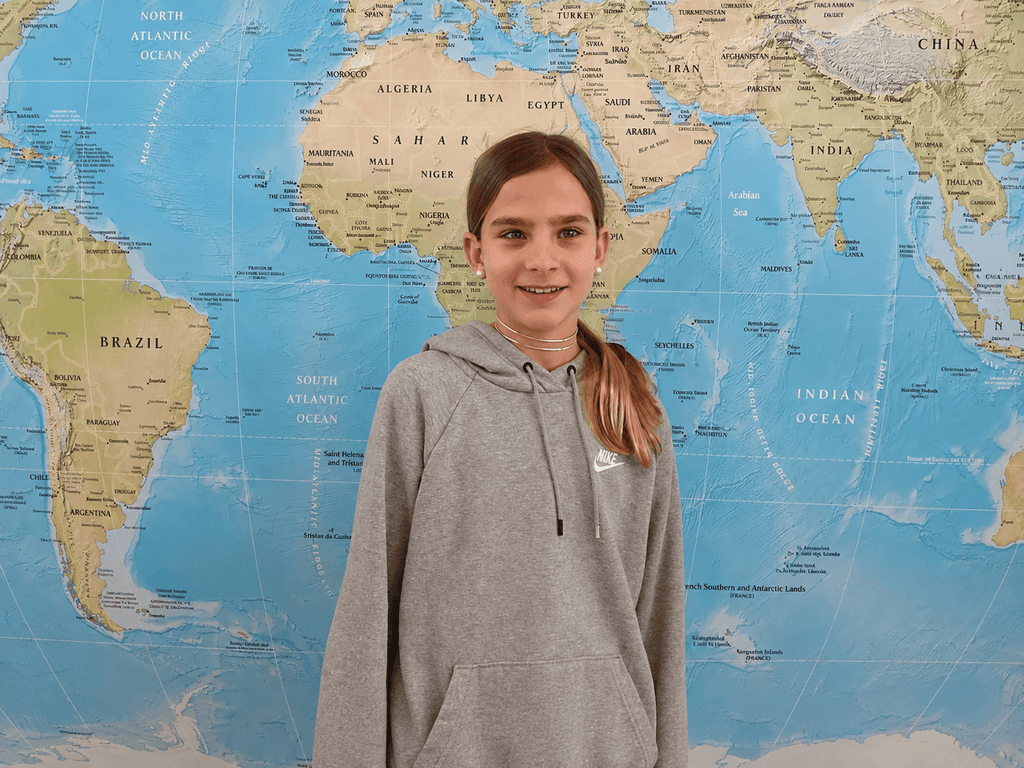
Will children maintain their academic level after a respectful education?
One of Lúa’s family’s biggest worries was the transition to another school. It is a common concern among families who wonder how respectful education and academic standards fit together when it comes to secondary school, exams, homework or the academic pace of other schools.
In Lúa’s case, moving to another school was a family decision for practical reasons: they wanted Lúa and her older sister to attend the same school. At the time, Arimunani did not yet offer the Bachillerato stage, and the family wanted the two sisters to be together. In fact, they explain that, if it had been possible, their first choice would have been for both girls to continue at Arimunani.
A solid educational foundation to keep moving forward
Lúa eventually changed schools and settled into her new environment. She noticed differences, especially in her freedom to move around, the classroom layout and the structure of the school day. What she found most difficult was not the academic level, but being unable to stand up, move around the classroom or enjoy the autonomy she had experienced before.
Academically, she explains it clearly herself: coming from a different system, she was worried that her classmates would be further ahead and that she would fall behind.
But that was not the case.
“We’re at the same level and we’re working on the same things.” – Lúa
Her family confirm this too. At a meeting with her teachers at the new school, they were not told of any difficulties or any need for extra support. Lúa was academically prepared. They noticed no difference between her and her classmates, and her first-term results were very good.
“They work differently here, but they do work.” – Lúa’s family
That sentence captures an essential idea: at Arimunani, children learn differently, through projects, experiences, workshops, autonomy, connection and observation. It is an approach rooted in neuroeducation that seeks to build a strong foundation through experience, consistency and self-confidence.
A solid educational foundation is not measured only by memorised knowledge. It is also reflected in the ability to adapt, think, organise oneself, express one’s needs and keep moving forward when circumstances change.
In Lúa’s story, that foundation can be seen in her ability to adapt, her independence, her good academic level and a personality that continues to find its own place in the world.
Lúa and her family’s full story at Arimunani
In these interviews, Lúa and her family share first-hand what their time at Arimunani was like, how she later adapted to another school and what they learnt from this stage of her life.
A conversation about respectful education and academic level, individuality, confidence and different ways of learning, which may help other families asking themselves similar questions.