


Nico’s story after Arimunani
There are stories that help us understand what emotional support at school means better than any pedagogical explanation. Stories that are not only about methodologies, subjects or results, but about something deeper: how a child feels within a place, how they see themselves, and what they take with them when the time comes to begin a new path.
Nico’s story, and that of his family, is part of El Faro, our space for sharing experiences that inspire the path of education.
Nico arrived at Arimunani in fourth grade, after having attended another school. He stayed with us until his first year of secondary school and, later on, decided to move to another centre. Today, at 14, he looks back with naturalness, gratitude and a clarity that is truly moving.
“Nico was a very insecure child; he didn’t dare to do anything.” Nico’s mother
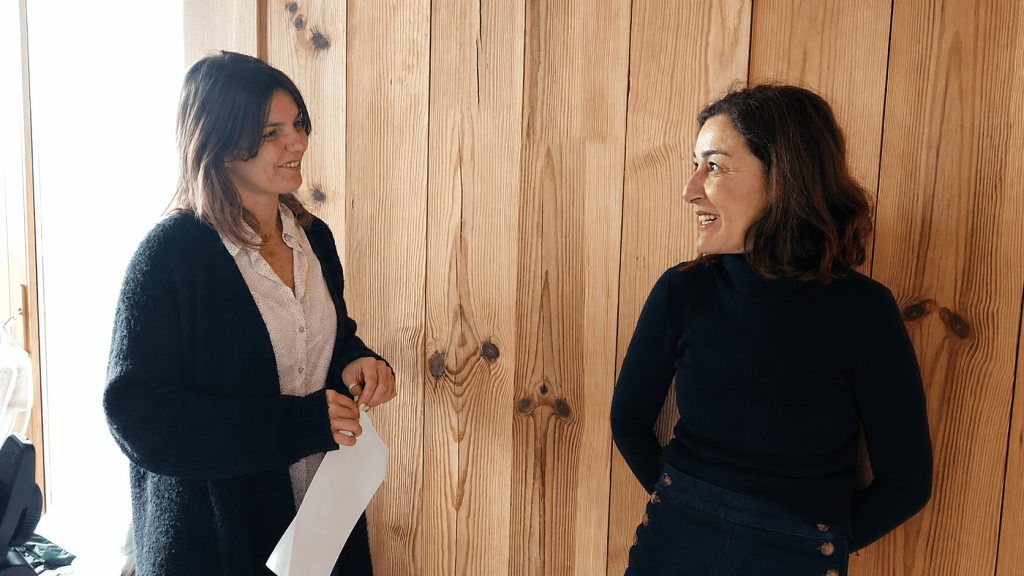
The value of feeling seen and recognised in a respectful school
In the early stages at Arimunani, emotional support begins by looking closely: seeing what each child needs, even when they still do not know how to express it.
By entering a living learning environment, Nico gradually received a deep sense of trust that helped him recognise himself, feel capable and understand that he had his own place in the world. During his Primary years, daily life focused on helping him discover his potential, awakening his talents through experience and connected play, and building a solid sense of security from within.
His mother explains that this transformation completely shaped the way he was, the way he learned and the way he related to himself. Nico, for his part, remembers that time as a happy stage, full of friends and days in which he felt truly content.
The moment of listening to oneself
With the arrival of adolescence and the transition to Secondary School, development naturally takes a new direction. It is a stage in which students need to assert themselves, overcome their fear of expressing their opinions and, above all, learn to find their own voice to express what they feel and need. Nico’s story is a beautiful reflection of this journey towards maturity.
Because learning at Arimunani takes place through integrated projects and in a very organic way, there came a moment in Secondary when Nico —whose mind was maturing and beginning to seek new personal challenges— felt curious about testing himself in a different format.
“I thought I wasn’t learning anything at Arimunani, and I felt a bit bad about not doing anything.” Nico
That concern, far from being an obstacle, was proof that Nico had learned to listen to himself and make his own decisions with courage. The change of school did not come from external pressure, but from his own need to check his academic progress in a traditional setting, take exams and put himself to the test. His mother listened to him, and so did the school team, guiding that transition with the respect and naturalness it deserved.
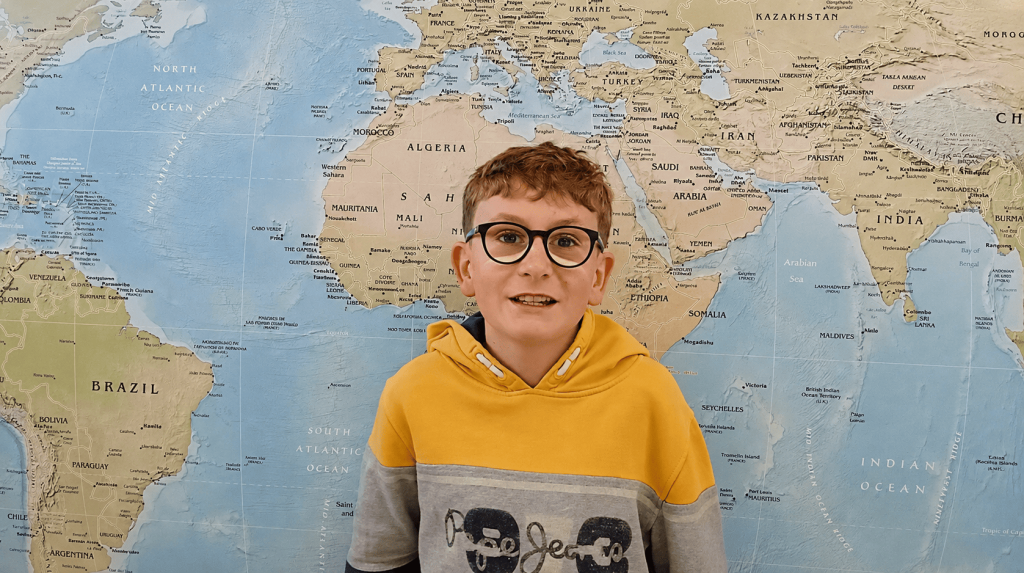
A solid educational foundation that flies high
Finally, Nico changed schools and moved to a centre with a more traditional methodology, with dynamics based on exams and continuous assessment. When he arrived, Nico showed that he was fully prepared.
One of the big questions many families ask themselves when they discover an active and respectful school is this: what happens afterwards?
What will happen if my child moves to another school?
Will my child have the right level?
Will my child know how to adapt?
Will my child be prepared for exams, homework and the academic pace?
Nico’s experience offers a valuable perspective on these questions.
Nico did well in all subjects; he felt strong, autonomous and adapted. His first exams were excellent, confirming that his cognitive and academic foundation had been well built.
“I truly believe that the educational foundation at Arimunani is very, very strong.”
Nico’s mother
One of his first marks was a 10. Beyond the grade itself, what mattered was what it confirmed: that everything he had experienced at Arimunani had not been a pause in learning, but a much stronger way of integrating it for life. A foundation linked to neuroeducation, consistency, the habit of doing and an inner confidence that supports everything else.
“Nico has fully internalised this phrase: if you want to, you can.” Nico’s mother
Educating goes far beyond memorising content for a Friday. It means giving them tools so they know they can, so they dare, so they can make mistakes without falling apart, and so they have the resources to go out into the world from their own essence. Today, Nico flies with confidence, with an excellent level and, above all, with the trust of knowing who he is.
Nico and his family’s full story at Arimunani
In these interviews, Nico and his mother share first-hand how they experienced their time at Arimunani and how the later adaptation unfolded. A conversation about education, trust and emotional support that can help other families in Mallorca take the step.